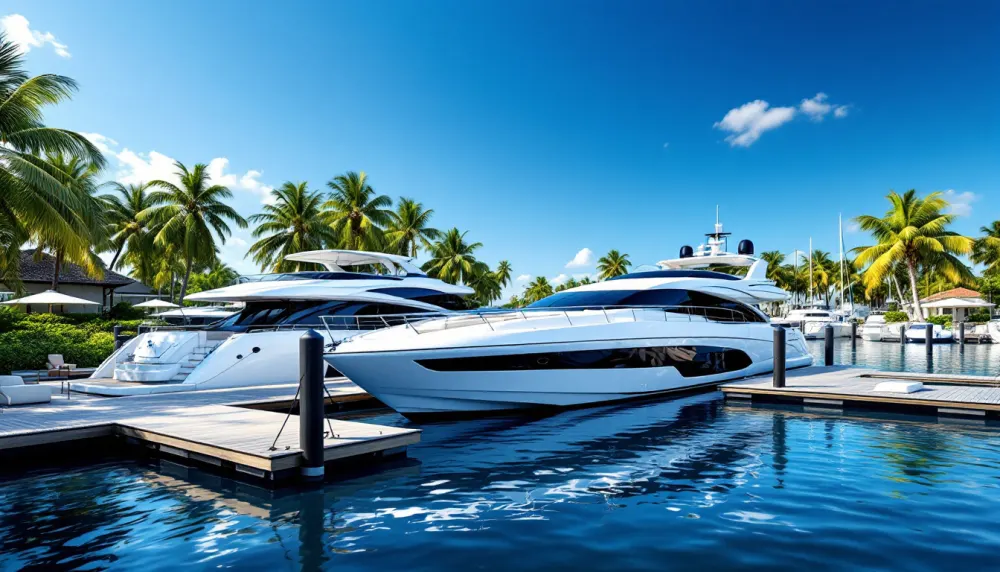
A neighbor offers you $400 to take his family out on your 26 foot center console for an afternoon. You say yes. In that moment Florida law reclassifies your boat, and your own insurance policy quietly stops covering it.
Peer to peer rental apps have made this ordinary across Broward County and Miami-Dade. Fort Lauderdale has one of the densest concentrations of listed boats in the country. Most owners who list one never read the two documents that decide whether a bad afternoon costs them a deductible or their house: Florida Statute 327.54, and the for hire exclusion buried in their own marine policy.
What Florida Law Calls a Livery
Florida Statute 327.54(1)(c) defines a livery as a person who advertises and offers a livery vessel for use by another. There is no fleet minimum in that sentence. One boat, advertised once, puts you inside the definition.
Subsection (2) is the part most owners miss: a livery may not offer a vessel for lease or rent without first being issued a no-cost livery permit by the commission. The commission is the Florida Fish and Wildlife Conservation Commission, and the permit costs nothing. Operating without one is a violation of the statute, so the only reason to skip it is not knowing it exists.
Two carve-outs are worth knowing. Subsection (7) does not apply to human-powered vessels, so kayaks, canoes and paddleboards sit outside the insurance requirements below. And subsection (6) bars renting a livery vessel other than a human-powered vessel to anyone under 18.
The $500,000 and $1 Million Insurance Floor
Florida does not require you to insure a recreational boat at all. No state statute mandates hull or liability coverage for private pleasure use, which is why so many boats on the New River carry nothing but a dockage agreement.
Rent that same boat out and the floor jumps from zero to a hard number. Florida Statute 327.54(7)(a) requires a livery's policy to provide coverage of at least $500,000 per person and $1 million per event.
There is a second obligation aimed at the renter. Under subsection (7)(b) you either carry a policy that insures the renter in the same manner and amounts and hand them the carrier's name, address and policy number, or you present them with the opportunity to buy that coverage themselves. If they decline, subsection (7)(b)2 requires a signed acknowledgment, and the statute prescribes the wording: it begins "I UNDERSTAND THAT I AM REFUSING TO PURCHASE A VESSEL RENTAL INSURANCE POLICY." FWC publishes form FWCDLE 319 for this purpose.
| Requirement | Private recreational use | Rented out (livery) |
|---|---|---|
| State insurance mandate | None | $500,000 per person / $1 million per event |
| FWC permit | Not required | No-cost livery permit required |
| Renter coverage | Not applicable | Carry it, or document a signed refusal |
| Minimum renter age | Not applicable | 18 for motorized vessels |
Keep every signed refusal. The acknowledgment is the only evidence that you met subsection (7)(b) on a trip where the renter went uninsured, and you will want it on file long after the renter has flown home.
Your Recreational Policy Has a For Hire Exclusion
This is the expensive half. Almost every recreational marine policy written in Florida excludes use of the vessel for hire, charter or rental. The exclusion is not obscure and it is not negotiable after the fact. It sits in the exclusions section, usually in a single clause, and it removes both the liability cover and the hull cover for any trip that falls inside it.
Compensation does not have to look like a charter fee. Agencies that write marine business routinely warn that fuel reimbursement, a share of the dockage, or a barter arrangement can be enough to put a trip in for hire territory. Wording varies between carriers, so read your own exclusions page rather than a summary of it, and get the answer in writing from your carrier before the first booking.
Picture how this plays out. A renter's guest slips on your swim platform off Hollywood Beach and needs surgery. The claim goes in. The adjuster asks how the renter came to be aboard, finds a booking receipt, and declines the claim under the for hire exclusion. You are now personally answering a bodily injury demand with no carrier behind you, and the hull damage from the same incident is yours as well. Our Florida boat and yacht insurance page covers what a properly written recreational policy does and does not include, which is the baseline this exclusion carves into.
How the Platform Policies Actually Fit
Boatsetter, which is headquartered in Fort Lauderdale, partners with Buoy to provide insurance for peer to peer trips booked on the platform, and offers optional renter coverage that it describes as meeting Florida's statutory livery insurance requirements. The peer to peer policy is built for owners who do not hold a commercial policy. It is required for owners listing a personal boat, sits on top of the recreational policy, and is charged per booking.
Owners who already carry their own commercial charter policy can opt out of the platform program, and Boatsetter asks for proof of coverage that meets state and Coast Guard minimums before approving the listing. On fees, Boatsetter says most peer to peer vessels are charged a listing fee of roughly 13.5 percent plus a per booking insurance fee, and estimates that owners insured through the platform keep somewhere around 65 to 85 percent of the boat price.
Platform coverage applies to trips booked through the platform. A side deal arranged by text message with a renter you met on the app is outside the platform policy and still excluded by your recreational policy, which leaves the trip uninsured twice over.
These programs change. Boatsetter's owner coverage ran through a GEICO and BoatUS arrangement before the Buoy program, and older guides still describe limits from that era. Confirm the current insurer, limits and deductibles from the platform's own documents, and read the policy rather than the marketing page, because the exclusions and the hull valuation basis are what matter at claim time.
Captain for Hire, Bareboat, or Neither
Whether anyone needs a license turns on who is being paid and who is in control of the vessel.
- Six or fewer paying passengers on a vessel under 100 gross tons: the operator needs a Coast Guard OUPV credential, the license everyone calls a six-pack. Professional crew do not count toward the six.
- More than six paying passengers: that requires a Master credential and an inspected vessel, which is a different and far more demanding standard.
- Bareboat charter: the charterer takes over operation of the boat and hires any captain directly. If you stay aboard, or keep control of where the boat goes, the bareboat characterization fails and the trip is a passenger carrying voyage.
- Fishing charters add a layer. The FWC saltwater charter license is separate from the federal credential and sits on top of it.
Any compensation at all can move a trip into passenger for hire status, including money handed over as fuel money. Whether a given arrangement is a genuine bareboat charter is fact specific, and the Coast Guard National Maritime Center or a maritime attorney is the right place to settle it. Guessing wrong is how owners in Miami and Fort Lauderdale end up on the receiving end of an illegal charter enforcement action.
What Charter Coverage Costs in South Florida
Recreational boat insurance in Florida typically runs from a few hundred dollars a year on a small outboard to a few thousand on a larger hull, driven mostly by value, length, cruising range and named storm exposure.
Commercial and charter coverage is a different product at a different price. Marine agencies generally describe it at roughly two to four times recreational pricing, with quoted ranges starting around $3,000 a year for a modest charter operation and climbing well into five figures for larger passenger vessels. Those are agency estimates rather than quotes, so treat them as a planning range and price your own boat.
A charter program is also built from different parts. Expect protection and indemnity liability for passenger injury and third party damage in place of a simple recreational liability limit, hull cover on terms that reflect commercial use, and Jones Act or crew cover if you employ anyone aboard. Passenger count, whether you supply a captain, and how far offshore you run are the levers that move the premium.
Before You List the Boat in Broward County
- Pull your marine policy's exclusions page and find the for hire, charter or rental clause. Read the clause, not the brochure.
- Ask your carrier in writing whether any paid trip is covered. A reassuring phone call is not evidence when an adjuster is reviewing a booking receipt.
- Apply for the FWC livery permit before the first booking. It costs nothing and operating without it is its own violation.
- Decide how you satisfy section 327.54(7)(b): carry renter coverage at $500,000 and $1 million, or build the signed refusal into your check-in routine.
- Check your dockage agreement. Many Broward County marinas prohibit commercial activity from a recreational slip, which is a separate problem from insurance.
- Confirm the licensing position before you advertise a captained option, because the advertisement is what regulators read first.
- Price a commercial policy alongside the platform program. If you rent the boat out regularly, your own charter policy may beat a per booking fee and it removes the dependency on one platform.
Renting the boat out is a reasonable way to offset what a slip in Fort Lauderdale costs. The mistake is doing it on a policy written for pleasure use and a statute nobody read. Fix the permit and the coverage first, then take the bookings.