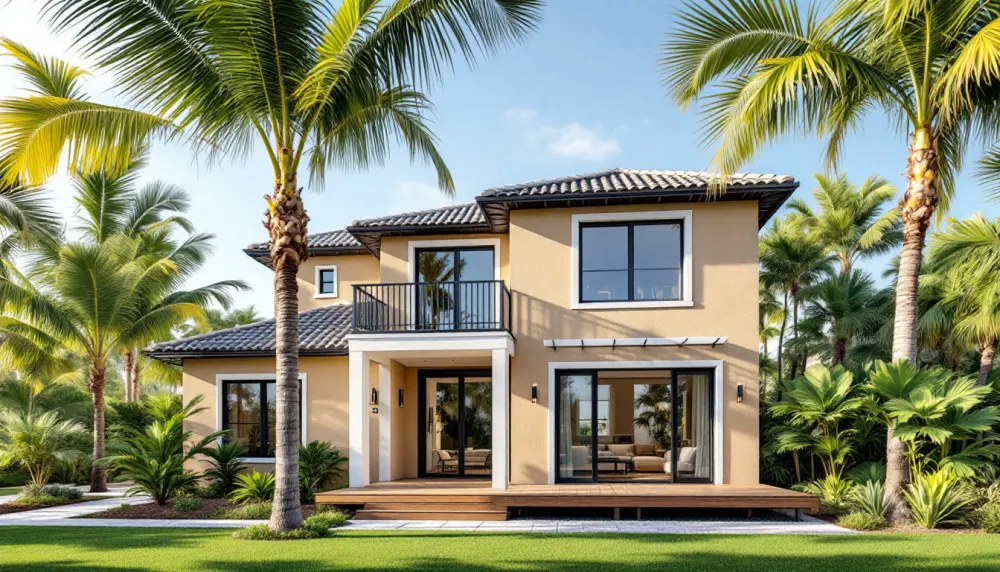
A Weston owner opens the August renewal notice on a $625,000 concrete-block house one block from the Everglades levee, sees a $6,400 homeowners premium, and calls three agents to reshop before signing. A Pembroke Pines homeowner in Chapel Trail learns after a fall tropical storm that the wind mitigation form on file with the carrier is seven years old and shows toe-nail roof-to-wall attachment, even though the entire roof was replaced with structural clips in 2022. A Coral Springs owner discovers after the April rain event that the standard homeowners policy paid nothing for the water that came up through the slab, because the flood policy was never bound at closing and the mortgage servicer never enforced the requirement. Three ordinary Broward County homeowners, three different failures, and the same underlying pattern: the policy was priced against the house on last year's declarations page, not the house actually standing on the lot.
Broward home insurance is a specific problem inside the broader Florida market. The entire county sits in the High-Velocity Hurricane Zone (HVHZ) under the Florida Building Code, priced against the highest design wind loads in the country, and the 31 municipalities inside Broward price very differently from each other. A $500,000 house in Weston does not quote like a $500,000 house on Hollywood Beach, and a Coral Springs 1990s two-story does not quote like a Fort Lauderdale coastal 1960s ranch. This guide walks through what a Broward County homeowners policy actually covers, how the county prices against inland Florida, what the coverage costs in 2026 city by city (Weston, Pembroke Pines, Coral Springs, Sunrise, Miramar, Davie, Plantation, Hollywood, Pompano Beach, Fort Lauderdale, and the smaller municipalities), how the hurricane deductible under Florida Statute § 627.701 sizes your out-of-pocket exposure, why wind mitigation credits are the single biggest lever a Broward owner controls, why flood is a separate policy across most of the county after the April 2023 rain event, and the recurring gaps that catch Broward homeowners on the first serious loss.
The single field on a Broward County homeowners policy that decides most claim outcomes is the Coverage A dwelling limit set against real Broward replacement cost per square foot. Construction and labor costs in Broward run materially higher than the statewide average, and a Coverage A limit that drifted below current cost quietly caps every partial-loss payout at the wrong ceiling. Reset the limit annually against a real replacement-cost estimate, not against last year's declarations page plus a small inflation guard.
What a Broward County Homeowners Policy Actually Covers
Almost every homeowners policy sold in Broward is written on an HO-3 or an HO-5 form. Both cover the dwelling on an open-perils basis (all direct physical loss except what the policy specifically excludes), and both split the coverage into five standard sections. Knowing what each section pays, and where each one caps, is what separates a policy that responds to a Broward loss from one that leaves a gap.
- Coverage A (Dwelling): the house itself. The single most important limit on the policy, set to full replacement cost. A Coverage A drift below current Broward construction cost triggers the coinsurance clause on most forms and cuts the payout on every partial loss, not just total losses.
- Coverage B (Other Structures): detached structures such as a pool cage, a detached garage, a shed, a fence, a seawall, or a boat dock. Standard at 10 percent of Coverage A on most forms. A screen pool cage on a Weston or Pembroke Pines two-story routinely costs $18,000 to $45,000 by itself, and a dock or seawall on a Fort Lauderdale finger canal can easily exceed the 10 percent default. Schedule these separately when the default falls short.
- Coverage C (Personal Property): furniture, electronics, clothing, and everything else inside the home. Standard at 50 to 75 percent of Coverage A, with sub-limits on jewelry ($1,500), cash ($200), firearms ($2,500), and business property ($2,500). High-value jewelry, watches, art, and collectibles need a scheduled personal property endorsement to close the sub-limit gap.
- Coverage D (Loss of Use / ALE): pays additional living expenses (hotel, restaurants, storage, rental) when the home is uninhabitable during a covered loss. Standard at 20 to 30 percent of Coverage A on Florida forms. Broward rental rates spike after a named storm, and Coverage D at 20 percent of a $500,000 dwelling is only $100,000; larger families often need higher.
- Coverage E (Personal Liability) and Coverage F (Medical Payments): third-party liability for injuries or property damage caused by you, your family, or your pets. Coverage E defaults to $100,000 or $300,000; a Broward owner with a pool, a dog, teen drivers, or a dock people step onto should carry $500,000 minimum and layer a personal umbrella above it.
The single largest exclusion on every HO-3 and HO-5 sold in Broward is flood. Water that rises from the ground, backs up from a storm sewer, or arrives as storm surge is not covered by a standard homeowners policy anywhere in Florida. Broward sits inside more designated Special Flood Hazard Areas than most Florida counties of its population, and even the interior western cities that carriers historically treated as low-risk (Weston, Pembroke Pines, western Sunrise, Miramar) saw significant water losses from the April 2023 rain event that dropped more than 25 inches on parts of Fort Lauderdale and pushed floodwater across neighborhoods that had never carried flood coverage.
Why Broward Prices Differently from Inland Florida
Broward and Miami-Dade are the only two counties inside the High-Velocity Hurricane Zone (HVHZ) under the Florida Building Code, designed for the highest ultimate wind loads in the country. Every window, door, garage door, roofing product, and structural connector installed in Broward has to carry a valid Miami-Dade Notice of Acceptance (NOA) or equivalent Florida Product Approval and be installed to an approved engineering drawing. The building code is the strictest in the state, which is good news for loss experience but expensive at construction and at replacement cost.
The insurance math flows from the code. Carriers price Broward wind against the same HVHZ model as Miami-Dade, and the wind portion of the premium is materially larger than in inland counties. Broward specifically runs hot on named-storm exposure along a 24-mile coast from Deerfield Beach through Hallandale Beach, on non-catastrophe water losses driven by aging cast-iron plumbing in older central Broward pockets, on liability exposure driven by high pool and dock density, and on replacement cost per square foot that runs well above the panhandle for the same construction class.
The counterweight is that Broward homes built or re-roofed under the current code carry meaningful wind mitigation credits that inland counties do not access at the same depth. Most of Weston (built out through the 1990s and 2000s), most of Pembroke Pines west of I-75, and the newer developments across Coral Springs, Miramar, and Parkland benefit from newer construction and newer roofs. A properly documented HVHZ-compliant roof, impact-rated windows and doors on every opening, and a secondary water resistance layer under the roof deck routinely combine into wind credits that pull 20 to 45 percent off the wind portion of a Broward premium.
What Broward County Home Insurance Costs in 2026
Broward premiums are driven by dwelling limit, roof age and roof material, wind mitigation features, distance to the coast, flood zone, construction class, prior claims, and the specific ZIP code. The ranges below are typical planning figures for a Broward single-family home in 2026, not a bound quote. Coastal ZIP codes, older roofs, and frame construction each push the premium up materially from the ranges shown, and any home east of Federal Highway will typically sit at the upper end of its row.
| Home profile | Typical Broward location | Typical 2026 annual premium |
|---|---|---|
| $350,000 CBS, roof 0-5 years, full wind mitigation | Inland western Broward (Weston, Pembroke Pines, Miramar) | $2,600 to $4,500 |
| $450,000 CBS, roof 0-5 years, impact windows all openings | Coral Springs, Parkland, Sunrise, Plantation | $3,400 to $5,600 |
| $500,000 CBS, roof 10+ years, partial mitigation | Central Broward (Tamarac, Lauderhill, Oakland Park) | $5,000 to $8,200 |
| $600,000 CBS, roof 0-5 years, full mitigation | Davie, Cooper City, southwest Broward suburbs | $4,200 to $7,000 |
| $700,000 CBS, roof 0-5 years, impact glass, hip roof | Fort Lauderdale inland, Wilton Manors | $6,500 to $10,500 |
| $900,000+ CBS, coastal or Intracoastal-adjacent | Rio Vista, Las Olas Isles, Harbor Beach, Hollywood Beach | $9,500 to $22,000+ |
| Older frame home, roof 15+ years | Sailboat Bend, older central Broward pockets | $6,500 to $15,000; may require Citizens |
Two data points frame the 2026 market. First, Bankrate's 2026 index puts the statewide Florida average near $11,759 a year for $300,000 in dwelling coverage, well above the national average. A typical Broward home sits inside the state distribution but leans toward the higher end because of the HVHZ wind rating and the coastal exposure. Second, Citizens Property Insurance Corporation reduced rates in Broward and Miami-Dade in 2026 as the litigation drop from HB 837 flowed through loss ratios, and a large share of Broward homeowners on Citizens saw rate reductions rather than the double-digit increases the county absorbed between 2019 and 2023. Reshopping in 2026 is worth a Broward owner's time in a way it has not been for several renewal cycles.
The biggest single lever on a Broward premium is the roof. Broward carriers price roof age aggressively, and any roof over 15 years old typically triggers underwriting scrutiny, actual cash value settlement instead of replacement cost, or an outright decline from the admitted market. A roof replacement paid for out of pocket often pays back through premium reductions inside three to five renewal cycles on a Broward home, especially when the new roof unlocks the full set of wind mitigation credits at the same time.
How Your Broward City Changes the Rate
Home insurance is priced by ZIP and by distance to a named body of water. Two identical concrete-block houses with the same roof age and mitigation package can price 30 to 60 percent apart across Broward's 31 municipalities. The table below is a directional guide, not an offer of coverage, and the swing inside each row is driven mostly by roof age, mitigation credits, and how close the house is to the Atlantic or the Intracoastal Waterway.
| Broward city | Typical rate posture in 2026 | Notes |
|---|---|---|
| Weston (33326, 33327, 33331, 33332) | Toward the bottom of the Broward range | Master-planned 1990s-2000s build; newer roofs, hip-heavy design, deep wind mitigation credits, western Everglades edge holds down the wind rate |
| Pembroke Pines (33024, 33025, 33026, 33027, 33028, 33029) | Toward the bottom of the range | Chapel Trail, SilverLakes, Grand Palms; western pockets rate cheaper than eastern ones near US-441 |
| Coral Springs (33065, 33067, 33071, 33076) | Below the Broward average | Northwestern suburb, mostly CBS newer stock; roof age is the largest single spread inside the city |
| Parkland (33067, 33076) | Below the Broward average | Newer construction pushes wind mitigation credits toward the top of the ladder; higher dwelling values but lower unit rate |
| Sunrise, Plantation, Davie, Cooper City | Around the Broward average | Mixed 1980s-2000s build, mostly interior; roof age and impact-glass status decide the tier |
| Miramar (33023, 33025, 33027, 33029) | Around the Broward average | West Miramar CBS rates well; east Miramar closer to I-95 rates higher |
| Tamarac, Lauderhill, Oakland Park, North Lauderdale, Lauderdale Lakes | At or above the Broward average | Older housing stock (parts built 1960s-70s), elevated non-catastrophe water losses on cast-iron plumbing |
| Fort Lauderdale inland (33309, 33311 west, 33313, 33319) | At the Broward average | Interior arterial corridors; roof age drives most of the spread |
| Pompano Beach, Deerfield Beach, Lauderdale-by-the-Sea | Above the Broward average | Coastal wind and comprehensive exposure; older housing stock in central Pompano runs at the top of the local range |
| Hollywood, Dania Beach, Hallandale Beach | Above the Broward average | Coastal density plus older 1950s-70s pockets in central Hollywood; Hollywood Beach and Hallandale coastal properties at the top |
| Fort Lauderdale coastal (Rio Vista, Las Olas Isles, Harbor Beach, Coral Ridge) | At the top of the Broward range | On or one block from the Atlantic or a finger canal; flood insurance mandatory, wind rates at the top of the HVHZ range |
If you close on a home in a new Broward neighborhood, or move within the county, tell the carrier before the policy is bound. A change of ZIP alone can move the premium 20 to 40 percent up or down without any change to the house itself, and quoting a fresh Broward ZIP alongside your current one is a routine step whenever you sign a purchase contract. A buyer moving from a Hollywood Beach rental into a Weston or Coral Springs house is often looking at a materially cheaper premium on the same insured value the day the address changes.
The Hurricane Deductible: § 627.701 and Your Coverage A Limit
Every homeowners policy sold in Florida carries a hurricane deductible separate from the standard all-other-perils deductible. Florida Statute § 627.701 requires insurers to offer four hurricane deductible options on personal residential policies: $500, 2 percent, 5 percent, or 10 percent of the Coverage A dwelling limit. The deductible applies to any loss caused by a storm the National Hurricane Center has named, from the moment the watch is issued for any part of Florida until 72 hours after the watch is discontinued.
The percentage runs against the Coverage A dwelling limit, not the claim amount. On a $500,000 dwelling in Pembroke Pines or Coral Springs with a 5 percent hurricane deductible, the owner absorbs the first $25,000 of any named-storm loss before the carrier pays a dollar. On the same home with a 2 percent deductible, the out-of-pocket drops to $10,000. Most Broward owners pay the higher premium for the 2 percent deductible on any dwelling above $400,000 because a five-figure deductible is the wrong exposure to carry into a bad storm season.
The Florida hurricane deductible is calendar-year aggregate on personal residential policies. Under § 627.701(4)(a), if you pay the full hurricane deductible on the first named storm of the year, you do not pay it again for subsequent hurricanes in the same calendar year. Confirm this in writing with your carrier when the endorsement is issued; the annual reset is a Florida statutory benefit, not a policyholder favor.
| Coverage A dwelling limit | 2% hurricane deductible | 5% hurricane deductible | 10% hurricane deductible |
|---|---|---|---|
| $300,000 | $6,000 | $15,000 | $30,000 |
| $500,000 | $10,000 | $25,000 | $50,000 |
| $750,000 | $15,000 | $37,500 | $75,000 |
| $1,000,000 | $20,000 | $50,000 | $100,000 |
Wind Mitigation Credits: Broward's Biggest Single Lever
Wind mitigation is the mechanism the Florida Office of Insurance Regulation created to reward homeowners who reduce their wind loss potential, and Broward owners access it at the deepest end because HVHZ construction hits most of the credit categories automatically. A licensed inspector completes the OIR-B1-1802 Uniform Mitigation Verification Form and documents each mitigation feature. The credits then apply as a percentage discount to the wind portion of the premium.
- Roof covering: a roof installed under FBC-2001 or later carries a materially higher credit than a pre-2001 roof, and a roof installed under the current HVHZ code with the Miami-Dade NOA products carries the highest tier.
- Roof deck attachment: nail pattern and nail size on the plywood deck. Modern Broward re-roofs use 8d ring-shank nails at 6-inch spacing, the top credit category.
- Roof-to-wall attachment: how the trusses are tied to the wall (toe nails, clips, single wraps, double wraps, or structural connectors). Every step up the ladder is a credit tier.
- Roof shape: hip roofs get a larger credit than gable roofs because the aerodynamic profile reduces uplift; this is fixed at construction. Most of Weston, most of the newer Coral Springs and Parkland stock, and large parts of west Pembroke Pines are hip-dominant.
- Secondary water resistance: a self-adhering underlayment applied directly to the roof deck under the primary covering. Standard on new Broward re-roofs.
- Opening protection: impact-rated windows, impact-rated doors, and impact-rated garage door on every opening. Miami-Dade NOA glass is the top tier; hurricane shutters rated to Miami-Dade standards score second.
The compounded credit on a fully mitigated Broward home routinely runs 20 to 45 percent off the wind portion of the premium, and wind is the majority of the premium here. On a $500,000 home in Coral Springs or Weston, that is often $1,200 to $3,000 a year in savings. Two mistakes catch Broward owners on the mitigation form. First, letting the form lapse: the OIR-B1-1802 is generally valid for five years, and an expired form drops the credits at renewal even if the physical mitigation is still in place. Second, replacing a roof and never ordering a new form: the credits do not update automatically, and a Pembroke Pines homeowner who spent $22,000 on a new HVHZ roof and did not order a fresh inspection is still paying premium for the old roof.
Flood Is a Separate Policy Across Most of Broward
Broward sits inside more Special Flood Hazard Areas than most Florida counties of its size. The full coastal strip from Deerfield Beach through Hallandale Beach carries Zone AE or Zone VE designations that trigger the federal mandatory purchase requirement whenever a federally-backed mortgage is on the property. Inland flooding is not limited to the mapped zones either; the April 2023 rain event pushed several feet of water into Edgewood, Melrose Park, Sailboat Bend, and other Zone X neighborhoods that carriers and mortgage servicers had historically treated as low-risk. Parts of western Pembroke Pines, west Sunrise, and west Weston also carry mapped SFHAs tied to Everglades drainage and canal systems.
Two flood policy options exist for Broward owners. The National Flood Insurance Program (NFIP) is the federal program, priced under Risk Rating 2.0 since October 2021, and it caps building coverage at $250,000 and contents coverage at $100,000 on residential properties. Private flood carriers write above those limits, sometimes to full replacement cost, and increasingly price competitively against NFIP for owners in Zone X and Zone AE with elevation certificates. Owners of Broward homes above $500,000 should quote both markets on identical limits before renewing.
The deductible on a flood policy is separate from the deductible on the homeowners policy. A named storm that dumps 12 inches of rain and pushes storm surge across a Hollywood Beach or Pompano property can trigger a hurricane deductible on the homeowners side (for wind and wind-driven rain) and a separate flood deductible (for the ground water). Carrying both, at appropriate limits, is the only way to close the gap.
The 2026 Market: Where Broward Rates Are Actually Going
The Florida homeowners market has stabilized for the first time in nearly a decade, and Broward owners are seeing the benefit. HB 837 (signed in 2023) reduced the pool of one-way attorney-fee lawsuits that had inflated Florida loss ratios for two decades; the statute also moved Florida to a modified comparative-negligence rule where a plaintiff who is more than 50 percent at fault recovers nothing, and shortened the negligence statute of limitations from four years to two. Property insurance lawsuit filings dropped meaningfully after the reforms, and multiple new insurance companies have entered Florida since, which brings real competition back to the Broward admitted market for the first time in years.
Citizens Property Insurance Corporation, the state-run insurer of last resort, reduced Broward and Miami-Dade rates in 2026 as its own loss experience improved, and its policy count has dropped from a peak above 1.4 million to well under 500,000 as the depopulation program routes eligible risks back to private carriers. For a Broward owner currently on Citizens, this is the reshopping cycle in years where an admitted carrier is most likely to write the account competitively. For an owner already on an admitted carrier, the same softening means a full market reshop is more likely to move the number than any single carrier's renewal notice will suggest.
None of that erases the structural cost drivers. Broward will remain one of the most expensive homeowners markets in Florida for the foreseeable future because the HVHZ wind rating, the reinsurance cost of Florida wind, and the replacement cost per square foot are not going to move materially. What has changed is that the runaway litigation premium built into every Florida rate filing between 2015 and 2022 is finally coming out of the numbers, and Broward owners who reshop in 2026 are the ones most likely to see it.
Gaps That Catch Broward County Homeowners
- Coverage A drift below current Broward replacement cost. Construction costs run well above the state average; a Coverage A limit set at closing five years ago is almost certainly below current cost, and the coinsurance clause on the policy cuts every partial-loss payout accordingly.
- Expired OIR-B1-1802 wind mitigation form. The credits fall off at renewal, and the premium goes up by four figures on a fully mitigated Weston, Coral Springs, or Pembroke Pines home. Order a fresh inspection every four years and any time the roof is replaced.
- 5 percent hurricane deductible on a $500,000+ dwelling. The out-of-pocket is $25,000 or more before the carrier pays a dollar. Most Broward owners are better served by paying the higher premium for a 2 percent deductible on any home above $400,000.
- No flood policy on a home in Zone X. The April 2023 rain event demonstrated that FEMA flood maps do not capture all local flooding exposure, and roughly a quarter of NFIP claims nationally come from properties outside the high-risk mapped zones.
- Seawall, boat dock, or lift left unscheduled on an Intracoastal or canal home. Coverage B at 10 percent of Coverage A rarely covers replacement of a full seawall run or a covered lift; schedule these separately with the carrier.
- Loss-assessment coverage capped at $1,000 or $2,000 on an HO-6 condo policy in a coastal Broward building. The master policy hurricane deductible is passed through to unit owners as a special assessment; a $10,000+ assessment is common after a named storm.
- Coverage C sub-limits left in place with high-value jewelry, watches, or art in the home. The $1,500 jewelry sub-limit does not cover a $12,000 engagement ring; schedule the items separately with the appraisal on file.
- Coverage D at 20 percent on a large family in a five-bedroom Coral Springs, Parkland, or Weston house. Post-storm rental rates spike, and $100,000 of loss-of-use runs out fast when a family of six needs a four-bedroom rental for eight months.
- $100,000 personal liability on a home with a pool, a dock, a dog, or teen drivers. Broward jury verdicts on serious liability claims routinely exceed the $300,000 default, and a personal umbrella above $500,000 underlying is the correct floor.
- Older frame home priced against a CBS rate class. Frame construction in Broward rates materially higher; confirm the construction class on the declarations page matches the actual home.
Broward County home insurance works when Coverage A sits at real Broward replacement cost, the wind mitigation form on file is current and reflects every credit the home actually qualifies for, the hurricane deductible is sized to a loss the household could actually absorb, flood is a separate policy at correct limits for the zone, and the personal liability limit and umbrella match the exposure of a home with a pool, teen drivers, a dock, or coastal risk. The 2026 market is friendlier to Broward owners than any renewal cycle in recent memory. Reshop the policy against the house that is actually standing on the lot (whether that lot is in Weston, Pembroke Pines, Coral Springs, Fort Lauderdale, Hollywood, or one of the smaller cities in between) and reset the numbers before the next hurricane season.