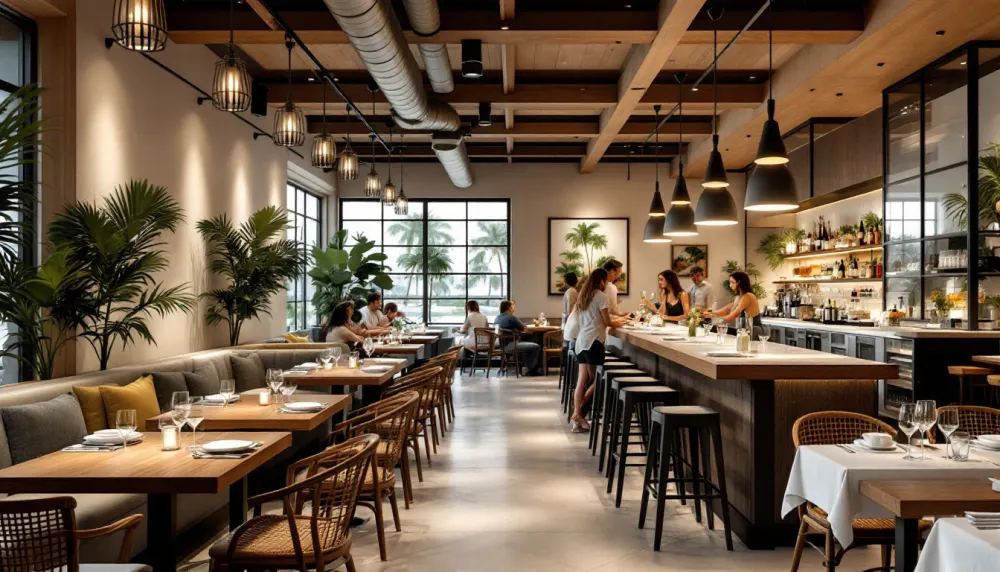
A guest at a Fort Lauderdale bistro slips on a wet tile near the host stand, fractures a wrist, and files a claim. The same week a line cook burns a hand on the flat-top, a walk-in cooler fails overnight and spoils $4,000 of inventory, and a customer who had four drinks at the bar leaves and causes a crash on Federal Highway. Four very different losses, four very different coverages, and a restaurant owner who finds out the hard way which ones the policy actually included. Restaurant insurance in Florida is less about a single policy and more about whether the right pieces are stacked correctly.
Florida restaurants carry more risk per square foot than almost any other small business: open flame, hot oil, slip hazards, refrigeration, alcohol, valuable equipment, and a steady stream of the public walking through the door. This guide covers what restaurant insurance in Florida actually includes, how restaurant liability works, where liquor liability fits and why Florida's dram shop law is unusually favorable to owners, what the whole package tends to cost, and the coverage gaps that catch owners across Broward County and Miami-Dade.
Most Florida restaurants start with a Business Owner's Policy (BOP) that bundles general liability and commercial property, then add the coverages a BOP leaves out: workers' compensation, commercial auto for delivery, liquor liability, equipment breakdown, and food spoilage. The BOP is the foundation, not the whole house.
The Coverages Every Florida Restaurant Needs
A full-service restaurant in Miami or Fort Lauderdale typically carries six to eight coverages. The core five appear on nearly every policy.
- General liability: pays for customer injuries (the slip-and-fall), property damage you cause, and related defense costs. Standard limits are $1 million per occurrence and $2 million aggregate.
- Commercial property: covers the building (if you own it), tenant improvements, kitchen equipment, furniture, and inventory against fire, theft, and covered weather events.
- Workers' compensation: required for any Florida restaurant with four or more employees, full or part time, and it pays medical bills and lost wages for burns, cuts, and slips on the line.
- Liquor liability: covers claims arising from serving alcohol, separate from general liability, which usually excludes alcohol-related losses.
- Equipment breakdown: covers the mechanical or electrical failure of refrigeration, HVAC, ovens, and walk-in coolers, which standard property coverage excludes.
Two more coverages apply to many but not all restaurants. Food spoilage (sometimes called food contamination) pays for inventory lost when a cooler fails or power goes out, a meaningful exposure during Florida's hurricane season. Commercial auto covers delivery vehicles and any car used for catering or supply runs, since personal auto policies exclude business use.
Restaurant Liability: Where the Claims Come From
Restaurant liability runs through the general liability policy, and the claims cluster in a few predictable places. Slip-and-fall is the most common: wet floors near the bar and host stand, freshly mopped tile, food dropped in a walk path. Foodborne illness claims arise when a guest blames your kitchen for getting sick, and they often need a product liability or specific foodborne-illness endorsement to be covered well. Assault and battery exposure shows up at bars and late-night venues and is sometimes excluded or sublimited, so it is worth checking the policy language directly.
Two structural points decide how well the policy responds. First, your premises-liability limit should match the foot traffic; a high-volume Miami venue carries more slip-and-fall frequency than a small Broward cafe and should not run on a bare minimum limit. Second, an assault-and-battery sublimit (common on bar and nightclub policies) can cap a serious claim at a fraction of the general liability limit, so a venue with a late-night crowd should read that endorsement before signing.
Liquor Liability and Florida's Dram Shop Law
If your restaurant serves alcohol, your general liability policy almost certainly excludes alcohol-related claims, and you need a separate liquor liability policy to cover them. Liquor liability responds when an intoxicated patron causes harm and the injured party comes back at the establishment that served the drinks.
Florida is one of the more favorable states in the country for alcohol vendors. Under Florida Statute 768.125, a business that sells or serves alcohol to a person of lawful drinking age is generally not liable for injuries that person causes while intoxicated. The statute preempts the usual negligence argument that the bar over-served. There are only two narrow exceptions where a Florida restaurant or bar can be held liable:
- Serving alcohol to a person under 21 who then causes injury or damage.
- Knowingly serving alcohol to a person the establishment knows is habitually addicted to alcohol.
That favorable statute is a reason some Florida owners question whether they need liquor liability at all. The answer is usually yes, for two reasons. The exceptions still create real exposure, especially around checking IDs and serving minors, and a single underage-service claim can be expensive. And the bigger practical driver is the contract: landlords, shopping centers, and event venues across Broward and Miami-Dade routinely require liquor liability as a condition of the lease or the event permit, regardless of what the statute says about ultimate liability. Under HB 837, effective March 2023, the statute of limitations on most Florida personal injury claims, including dram shop claims, is two years.
Even with Florida's vendor-friendly dram shop law, train and document your ID-checking and refusal-of-service procedures. The two statutory exceptions both turn on what your staff knew and did. A written, enforced alcohol-service policy is both a liability defense and something underwriters reward with better liquor liability pricing.
Property, Equipment Breakdown, and Spoilage
A restaurant's physical assets are concentrated and expensive: the line, the hood, the walk-in, the POS system, the furniture, and the tenant improvements you paid to build out a leased space. Commercial property coverage handles the named-peril losses (fire, theft, certain weather), but two Florida-specific gaps need separate attention.
Equipment breakdown is the first. A standard property policy covers a cooler that burns in a fire, but it excludes a compressor that simply dies, an oven control board that fails, or a walk-in that stops cooling because the motor burned out. Equipment breakdown coverage fills that gap and is inexpensive relative to the cost of replacing commercial refrigeration. Food spoilage is the second. When the cooler fails or a storm knocks out power, spoilage coverage pays for the lost inventory, which during a Florida hurricane can run into thousands of dollars across a stocked kitchen. Many policies tie the two together, since most spoilage starts with an equipment failure.
What Restaurant Insurance Costs in Florida
Premiums depend on concept, size, sales volume, alcohol percentage, hours, and claims history. A quick-service cafe with no alcohol and a small dining room sits at the low end. A full-service restaurant with a busy bar, late hours, and a large build-out sits much higher. The ranges below are typical 2026 planning figures for a small to mid-sized Florida restaurant, not a quote.
| Coverage | Typical annual cost (small Florida restaurant) |
|---|---|
| Business Owner's Policy (GL + property) | $2,000 to $6,000 |
| Liquor liability | $1,000 to $4,000+ depending on alcohol sales and hours |
| Workers' compensation | Rate per $100 of payroll; varies by role and payroll size |
| Equipment breakdown | $150 to $500 |
| Commercial auto (delivery) | $1,800 to $3,500 per vehicle |
Alcohol is the single biggest swing factor after size. A restaurant where alcohol is 10 percent of sales pays far less for liquor liability than a bar-forward concept where it is 50 percent or more. Late-night hours, live entertainment, and a history of claims all push the number up. Wind exposure on a coastal Fort Lauderdale or Miami Beach property raises the property side, sometimes with a separate hurricane deductible.
Gaps That Catch Florida Restaurant Owners
- Assuming the BOP includes liquor liability. It almost never does; alcohol claims need a separate policy.
- Running personal auto on a delivery car. Business use is excluded, so a delivery crash can be denied outright.
- Skipping workers' comp at four employees. Florida requires it for non-construction businesses at the fourth employee, counting part-timers.
- Insuring tenant improvements at zero. The build-out you paid for in a leased Broward or Miami space is your property to insure, not the landlord's.
- Ignoring equipment breakdown and spoilage. A failed walk-in is not a fire, so standard property coverage leaves both the equipment and the lost food uncovered.
- Under-limiting on a high-traffic venue. A minimum general liability limit on a busy Miami restaurant with a bar is a thin layer against a serious slip-and-fall or assault claim.
Restaurant insurance in Florida works when the pieces are matched to the concept: general liability sized to the foot traffic, liquor liability tied to the bar program, property coverage that includes the build-out and the equipment, workers' comp from the fourth hire, and spoilage that anticipates the next storm. Build the BOP first, layer the rest around it, document your alcohol-service procedures, and review the whole package before each renewal as the kitchen, the menu, and the sales mix change.